

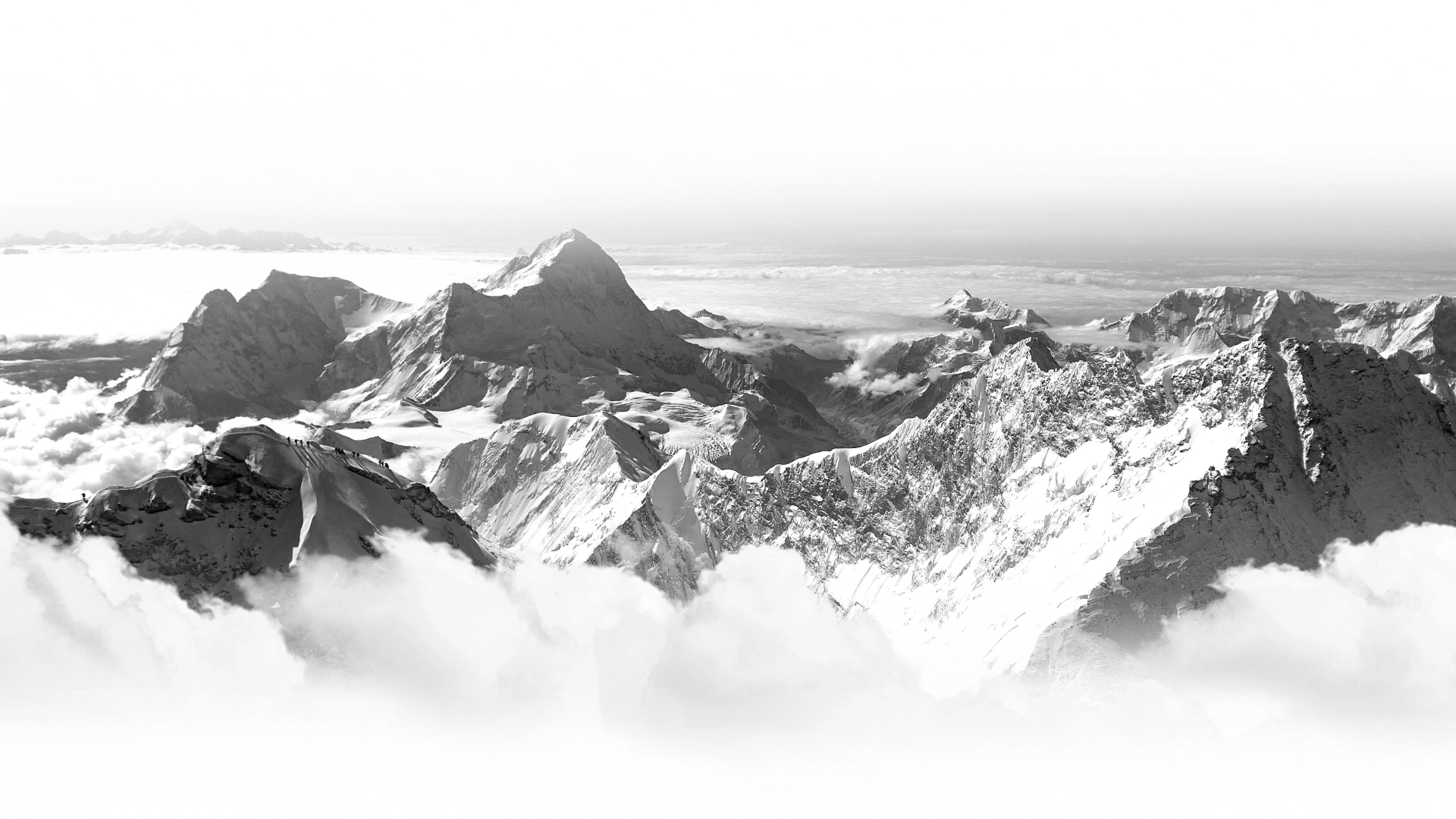
CHO OYU EXPEDITION
Trip Description
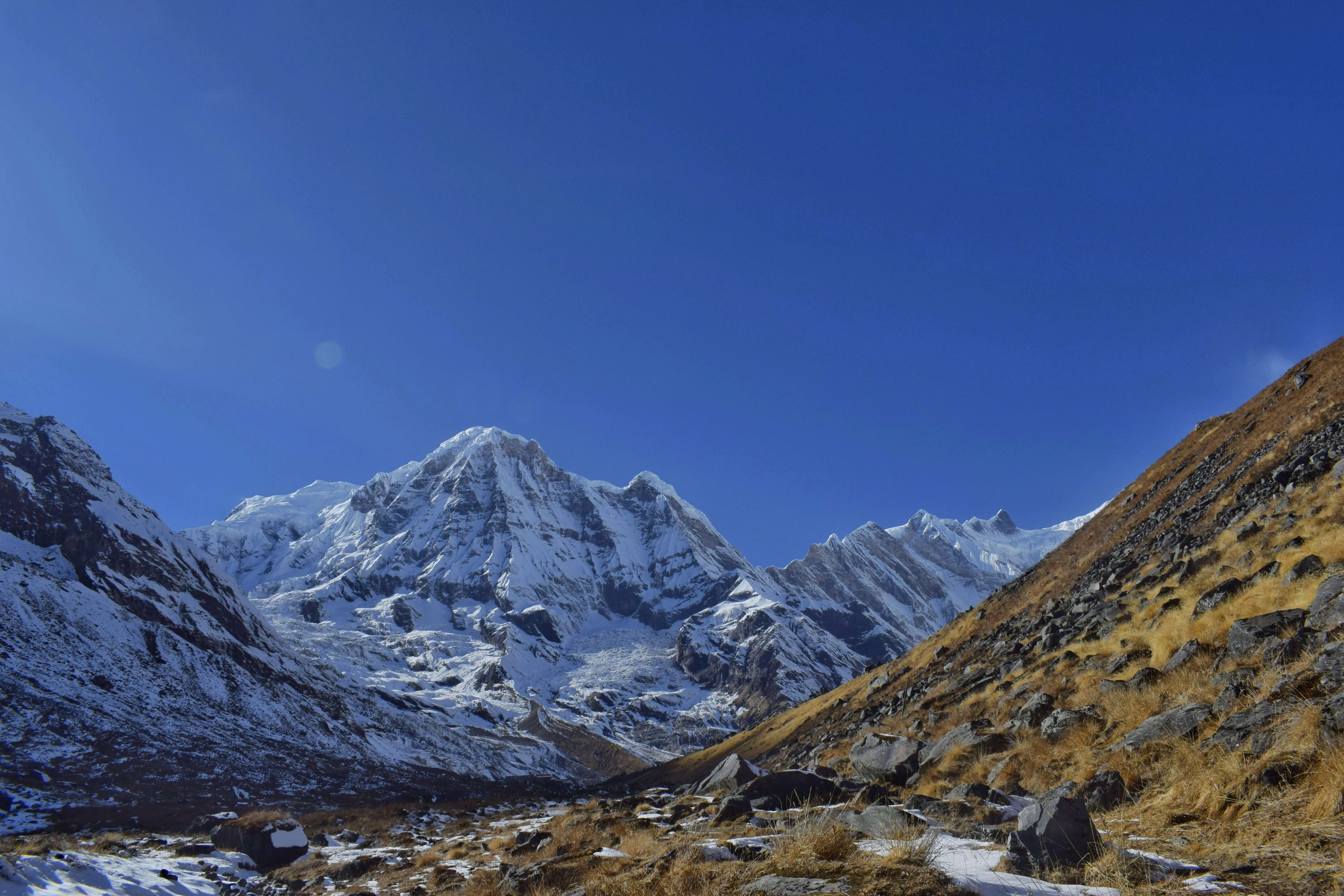
Cho Oyu's name translates from Tibetan as 'Turquoise Goddess' — a name that reflects the mountain's position on the Nepal–Tibet border and the Tibetan Buddhist cultural landscape that surrounds it. At 8,188 metres, it is the sixth highest peak on Earth, sitting six kilometres west of the Nangpa La — the ancient trade route between Nepal and Tibet that Sherpa communities have crossed for generations. The mountain was first summited in October 1954 by an Austrian team led by Herbert Tichy, just months after the first ascents of Everest and Nanga Parbat in the same historic year for 8,000-metre climbing.
The standard route via the northwest ridge on the Tibetan side is what gives Cho Oyu its reputation as the most accessible 8,000-metre peak. The approach from the Chinese Base Camp to Advanced Base Camp at 6,400m is non-technical, and the climbing above ABC, while serious at altitude, involves less sustained extreme technical terrain than the harder 8,000m peaks. The route passes through three high camps, with the most technically demanding section on the upper mountain between Camp 3 and the summit plateau.
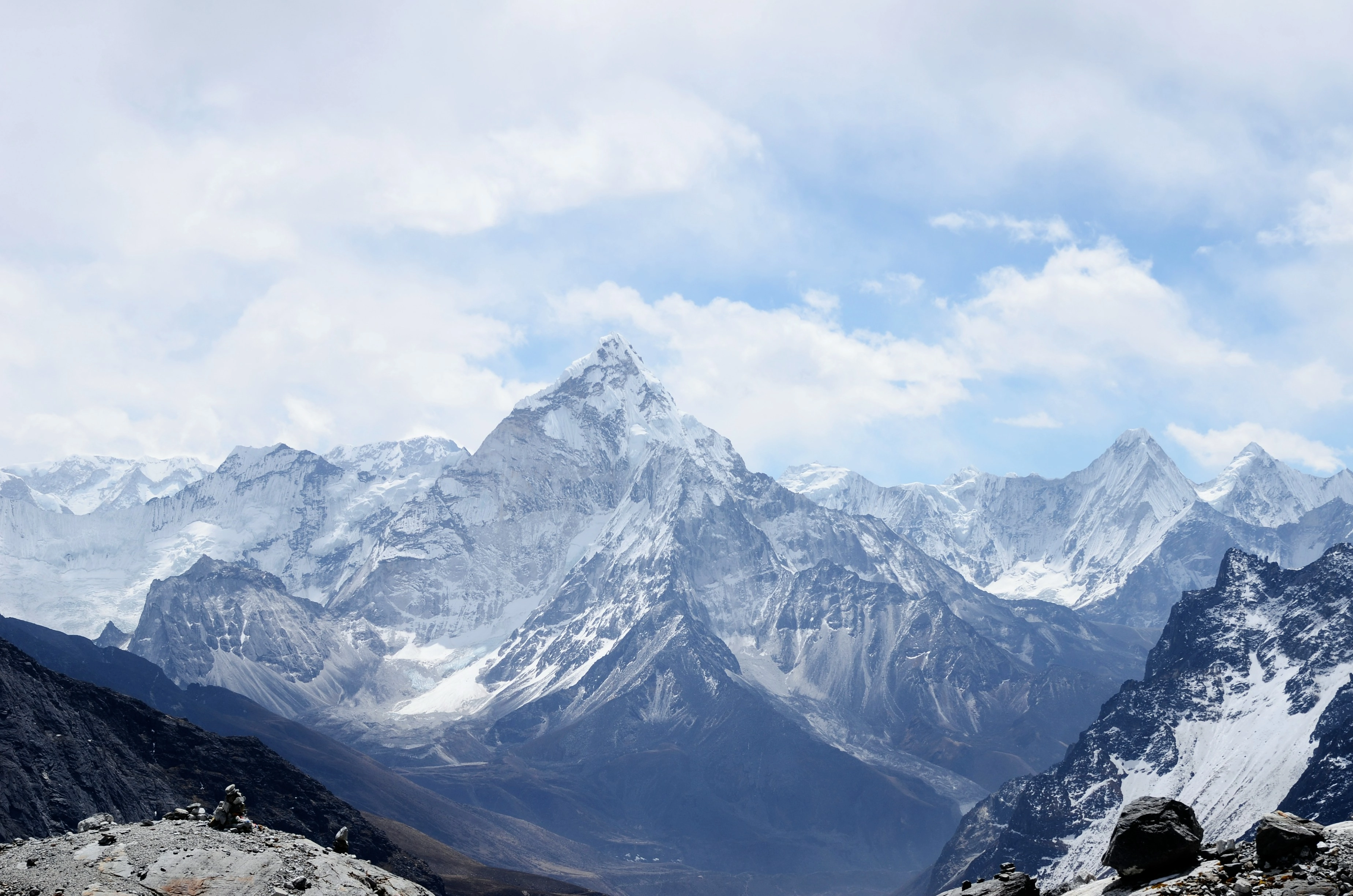
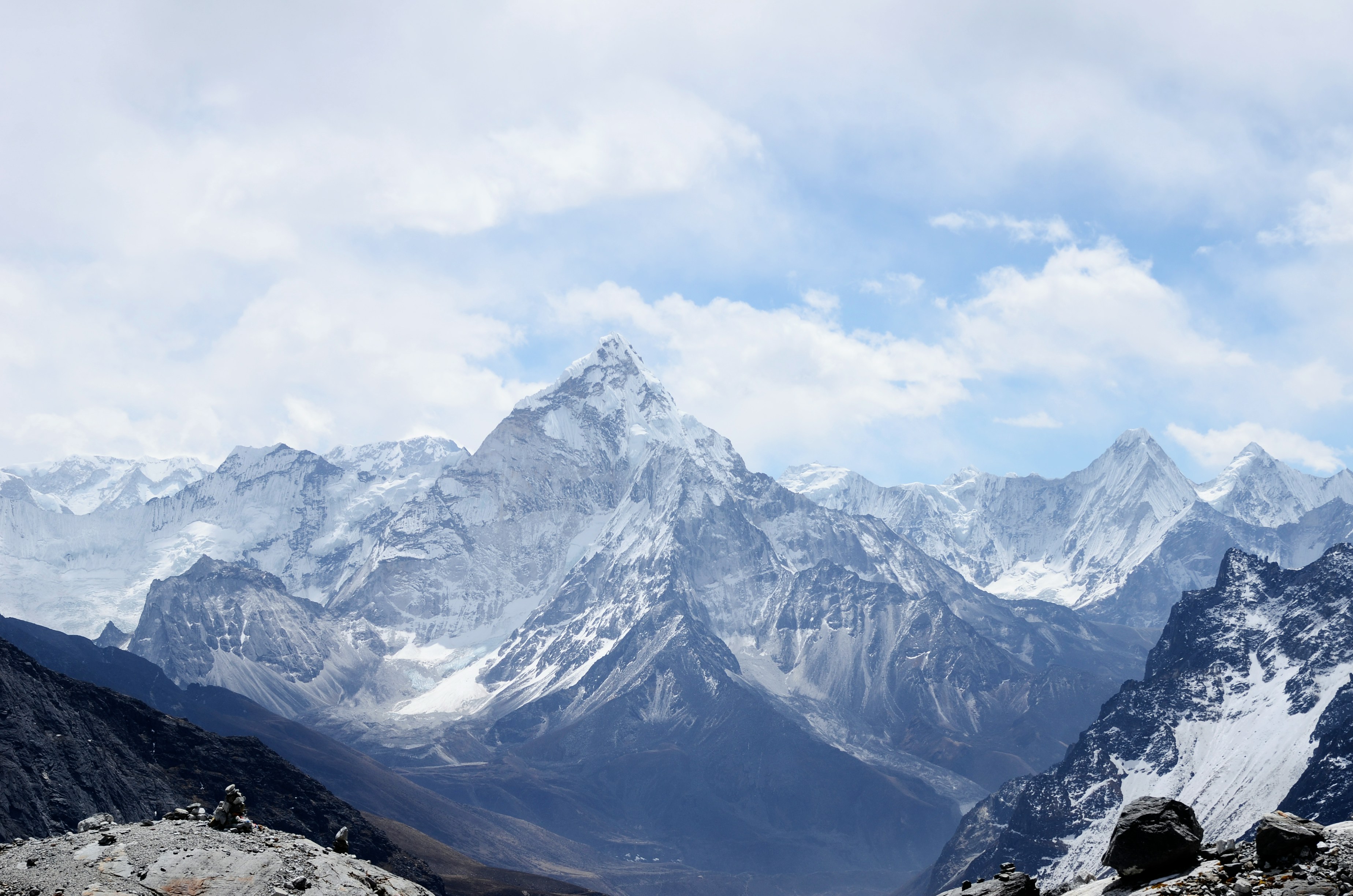
What the summit delivers, however, is fully in the 8,000-metre category: Everest rises to the east, Lhotse directly behind it, Pumori to the northeast, Makalu to the southeast, and Ama Dablam visible further down the valley. The view encompasses the full arc of the central Himalayan giants from a vantage that only eight mountains on Earth exceed. That perspective — earned through 30 days of expedition effort is one of the defining experiences in Himalayan mountaineering.
For climbers with ambitions toward K2, Everest, or any of the harder 8,000-metre peaks, Cho Oyu is the standard and well-regarded first step. Its summit success rate is the highest of any 8,000-metre peak, and the experience of functioning as a rope team in the death zone, managing supplemental oxygen, moving efficiently above 8,000m, and making sound decisions at extreme altitude is a direct and irreplaceable form of preparation that no lower peak can provide.


Trip Overview
Cho Oyu stands at 8,188 metres on the Nepal–Tibet border, six kilometres west of the Nangpa La pass — the world's sixth highest mountain and the most achievable 8,000-metre summit available to experienced mountaineers. Its northwest ridge route, approached from the Tibetan side avoids much of the extreme technical difficulty that characterizes the harder 8,000-metre peaks and presents a more manageable gradient of challenge for climbers making the transition from 7,000 metres to the death zone for the first time.
That description requires an honest qualification: Cho Oyu is still an 8,000-metre expedition. The altitude above 8,000m imposes demands on the human body that no amount of conditioning at lower elevation fully prepares for, and the objective hazards — crevasses, seracs, and the ever-present threat of sudden weather deterioration are real throughout. What Cho Oyu offers relative to the harder 8,000m peaks is a more accessible technical profile and a historically higher summit success rate, making it the most logical and well-supported first step into the death zone for climbers who have established themselves on 7,000-metre terrain.
The expedition is approached from Tibet — a helicopter or vehicle transfer from Kathmandu through the Timure border crossing to the Chinese Base Camp at approximately 5,700m, and then a trek to Advanced Base Camp at 6,400m. The climbing route ascends through three high camps to the summit, with unlimited supplemental oxygen included for all members and guides throughout the high-altitude phase. The autumn season — September through November — is the standard operating window, offering the most stable weather and the best overall conditions on the northwest ridge.
Cho Oyu is the mountain that serious high-altitude mountaineers climb before K2, before Everest, before the harder objectives. If you have 7,000-metre experience and are ready to step into the 8,000-metre range, this is the most structured and well-supported path available.
Expedition Highlights
-
Summit Cho Oyu (8,188m) — the world's sixth highest mountain and the most accessible 8,000m objective
-
The most logical and respected preparation peak for K2, Everest, and the harder 8,000m summits
-
Northwest Ridge route via Tibet — a well-established line with manageable technical demands relative to other 8,000m peaks
-
Unlimited supplemental oxygen for all members and guides throughout the high-altitude phase
-
Helicopter transfer Kathmandu–Timure — efficient approach to the Tibet side
-
Panoramic summit views of Everest, Lhotse, Pumori, Makalu, and Ama Dablam
-
IFMGA-certified lead guide and Climbing Sherpa support throughout
-
Option for a fully private 1:1 expedition with IFMGA Guide Mr. Prakash Sherpa
Led by IFMGA-Certified Professionals
The altitude above 8,000m imposes physiological and decision-making demands that make the quality of the guide team more consequential on Cho Oyu than on any lower objective. Above the death zone, acclimatization advantages erode, judgment becomes harder to access, and the consequences of poor route decisions or inadequate oxygen management are immediate and serious. An IFMGA-certified guide is not a luxury on an 8,000-metre expedition, it is the baseline standard for responsible operation at this altitude.
Every Cho Oyu expedition organized by Alpinist Climber Expeditions is led by an IFMGA / UIAGM / IVBV-certified mountain guide — the highest internationally recognized certification in professional mountain guiding. Our lead guides hold additional qualifications in Advanced Mountaineering, Wilderness First Aid, Helicopter Rescue and Marshalling, and High-Altitude Rescue, all applied in the field throughout the expedition.
Mr. Prakash Sherpa, CEO and Lead IFMGA Mountain Guide of Alpinist Climber Expeditions has personally summited Cho Oyu alongside Everest, Lhotse, Makalu, Dhaulagiri, Manaslu, Nuptse, Pumori, K2, and many more — several without supplemental oxygen. His direct summit experience on Cho Oyu gives him specific and current route knowledge that is directly relevant to every expedition he leads on this mountain. He is a member of the Nepal National Mountain Guide Association (NNMGA). For those selecting the premium 1:1 private option, Mr. Prakash Sherpa leads the full expedition personally.
Detailed Itinerary

A representative from Alpinist Climber Expeditions meets you at Tribhuvan International Airport and transfers you to your 4-star hotel. The evening begins with a welcome dinner — the full expedition team gathers for the first time, and your lead guide introduces the programme, the Tibet approach, and the sequence of the climb ahead.
1,330m
Hotel

A comprehensive briefing covers the full route, the Tibet-side logistics, camp structure, oxygen system management, acclimatization plan, safety protocols, Chinese permit formalities, and weather monitoring strategy. Equipment is confirmed and checked. You receive your Alpinist Climber Expeditions duffel bag, cap, and T-shirt. Any last-minute gear requirements are addressed here in Kathmandu while alternatives are still available.
1,330m
Hotel

An early helicopter flight from Kathmandu to Timure on the Nepal–Tibet border. From Timure, a road transfer through the Chinese border formalities and into the Tibetan plateau delivers the team to Gyabrag Base Camp at 5,700m — arriving the same day as departure from Kathmandu. The altitude gain from 1,330m to 5,700m in a single day is significant. Activity on arrival is kept to an absolute minimum. Tents are established, a light meal prepared, and the team rests early.
5,700m
Camp

A full rest day to begin altitude adaptation. The Puja ceremony is conducted in the morning — a traditional Sherpa blessing led by a lama, attended by the full expedition team, with all climbing equipment blessed before use on the mountain. At 5,700m on the Tibetan plateau, with Cho Oyu's northwest ridge visible directly above, the ceremony marks the formal beginning of the climbing phase. The rest of the day is for light acclimatization movement and rest.
5,700m
Camp

An IFMGA guide leads a technical training session at Base Camp covering oxygen system use and mask fitting, crampon technique on the glacier approach, fixed rope management, ascender use, and the protocols for moving efficiently as a team above 7,000 metres. Oxygen regulators and masks are tested on all members. This session ensures the team is fully prepared technically before the first altitude rotation begins.
5,700m
Camp

The first controlled altitude move above Base Camp — ascending to approximately 6,000m on the lower section of the northwest ridge before returning. This rotation confirms equipment function, initiates physiological altitude adaptation above Base Camp, and familiarizes the team with the route conditions above. An early return ensures the acclimatization benefit without unnecessary fatigue ahead of the Camp 1 rotation.
5,700m
Camp

A rest day at Base Camp. The body consolidates its adaptation to 5,700m. The team eats well, rests, hydrates thoroughly, and prepares for the first camp-to-camp move beginning the following morning. Weather forecasts are reviewed and the plan for the Camp 1 ascent confirmed.
5,700m
Camp

The team moves from Base Camp to Camp 1 at 6,400m — ascending the lower northwest ridge on glaciated terrain. The mountain's scale reveals itself more completely with every hundred metres gained. Camp 1 is a well-established position on the ridge. Tents are occupied, a hot meal prepared, and the team rests with Camp 2 and the upper mountain now visible above.
6,400m
Camp

From Camp 1, the team pushes up the ridge toward Camp 2, reaching approximately 6,700m before returning to Camp 1. This move gives the team its first exposure above 6,400m on the Cho Oyu route — the terrain between Camp 1 and Camp 2 is steeper and more demanding, and this controlled push begins altitude adaptation at the next level before the full summit rotation.
6,700m
Camp

A full descent from Camp 1 to Base Camp. The altitude drop from 6,400m to 5,700m allows meaningful physiological recovery — appetite returns, sleep quality improves, and the body restores the energy reserves that the previous two days have drawn on. This descent is a critical part of the acclimatization process, not a concession.
5,700m
Camp

A dedicated recovery day at Base Camp. The team rests, eats generously, and allows the body to fully consolidate the acclimatization gains from the first rotation. Weather forecasts for the upper mountain are reviewed. The second rotation to Camp 2 begins the following morning.
5,700m
Camp

The team returns to Camp 1 at 6,400m — familiar terrain now, climbed with noticeably greater efficiency than the first rotation. The body is better adapted, the route is known, and the focus shifts toward Camp 2 and the upper mountain. The team occupies Camp 1 tents and rests for the push to Camp 2 the following morning.
6,400m
Camp

The team pushes from Camp 1 to Camp 2 at 7,200m — the most significant altitude gain of the acclimatization phase. The terrain between Camp 1 and Camp 2 is sustained and demanding at this altitude. Camp 2 at 7,200m places the team above the vast majority of climbers who have ever been at altitude on this mountain. This is the moment when the scale of an 8,000-metre expedition begins to feel fully real. Hot food and drinks are prepared on arrival. The team rests carefully with the upper mountain now directly within reach.
7,200m
Camp

Full descent from Camp 2 to Base Camp — a significant drop from 7,200m that delivers rapid and substantial physiological recovery. Energy, appetite, and cognitive clarity return quickly at lower altitude. This recovery is the foundation of the summit push. The team rests at Base Camp and prepares for the summit rotation that begins within the high-altitude climbing window.
5,700m
Camp

This 11-day period is managed entirely in the field by Mr. Prakash Sherpa. It encompasses rest and recovery at Base Camp following the acclimatization rotations, a second push to Camp 2 and the first ascent to Camp 3 (7,700m), weather monitoring and summit window assessment, the summit push to Cho Oyu (8,188m), and the descent to Base Camp.
A typical sequence within this window: 2–3 days rest at Base Camp → Ascent Camp 1 → Camp 2 → Camp 3 (7,700m) → Summit push → Descent to Camp 2 → Base Camp. Summit day begins from Camp 3 in the early hours — typically midnight to 2 AM — targeting the summit plateau at 8,188m before midday and descending to Camp 2 or Base Camp the same day. Unlimited supplemental oxygen is in use above Camp 2 for all members and guides throughout this window.
8,188m
Camp

All high camps are cleared and the team descends to Gyabrag Base Camp for the final time. Base Camp is broken down — tents struck, equipment packed, and the site left clean in accordance with the expedition's environmental management standards. Arriving at Base Camp with the summit of the world's sixth highest mountain behind you marks one of the most significant moments of the expedition.
5,700m
Lodge

The team departs Gyabrag Base Camp by road for the drive back through Tibet to the Timure border crossing. The road descends steadily from the plateau, and the dramatic altitude drop — from 5,700m to 1,400m — is a physical and psychological transition that marks the end of the high-altitude phase. Overnight at a local guesthouse near Timure.
1,400m
Lodge

A helicopter returns the team from Timure to Kathmandu — the same corridor used on arrival, now crossed in the opposite direction with the summit of the world's sixth highest mountain accomplished. The flight arrives in Kathmandu in the late morning. The team transfers to the 4-star hotel for the final days before departure.
1,330m
Hotel

A free day in Kathmandu for rest, recovery, and exploration. Thamel, the UNESCO heritage temples, Boudhanath Stupa, and the restaurants of the old city are all accessible. A farewell dinner in the evening is a proper celebration of 30 days, a 8,188-metre summit, and everything it took to reach it.
1,330m
Hotel

Private airport transfer for your outbound flight. The Cho Oyu Expedition concludes — 30 days from Kathmandu to the summit of the world's sixth highest mountain and back.
Why ACE?
Alpinist Climber Expeditions was built around a principle that has guided every climb we have organized — that the quality of the experience on a mountain is directly tied to the quality and depth of experience of the people leading it. What sets Alpinist Climber Expeditions apart is something that cannot be manufactured or replicated — it comes from decades spent on these mountains, from the culture that formed us, and from a deeply held belief that every climb deserves to be done properly.
We are a team of professional Sherpas. Not guides who have visited the Himalaya — guides who grew up here, who know these peaks in every season, and who have spent careers developing the technical skills and mountain judgment required to lead expeditions safely and successfully.
Our team holds IFMGA / UIAGM certification — the highest international standard in professional mountain guiding — alongside Advanced Mountaineering, Wilderness First Aid, Helicopter Rescue, and High-Altitude Rescue qualifications. Our lead guide has summited multiple 8,000-metre peaks, including ascents without supplemental oxygen. This is not a credential on paper. It is a lived capability that directly protects every climber who climbs with us.
We offer two expedition structures: a standard option with small-group expedition, and a premium option with 1:1 guide-to-client ratio. Both are built on the same standard of safety, preparation, and professionalism.The standard option maintains a minimum 1:3 guide-to-client ratio with a dedicated IFMGA lead guide and Sherpa support on every climb. Our premium 1:1 private option places you on the mountain directly alongside IFMGA Guide Mr. Prakash Sherpa.
We do not run high-volume operations as our clients are not bookings. They are climbers who have chosen to trust us with something significant and we take that trust seriously on every single expedition. We do not cut corners on acclimatization, staffing ratios, or safety equipment. We organize expeditions the way they should be organized — with patience, precision, and the kind of local knowledge that only comes from growing up in these mountains and spending a career on them.
The Team
Expedition Guides
Every guide on our team has been selected for their technical ability, high-altitude experience, and personal commitment to the safety and success of every climber they lead. All guides carry extensive experience at altitude and hold a proven record of safety, summit success, and strong compatibility with international clients.
The number of guides assigned to each expedition is determined by the size of the climbing team. Our standard guide-to-member ratio is 1:3, ensuring that every climber receives consistent, attentive support throughout the approach, the acclimatization phase, and the technical climb itself.
Climbing Sherpa Support
A dedicated team of experienced Climbing Sherpas supports every expedition with load carrying on the mountain, route preparation, and high camp management. On summit day, we maintain a 1:1 Sherpa-to-climber ratio — a commitment that reflects our belief that the summit push is where support matters most.
Our Climbing Sherpas are not simply load carriers. They are experienced high-altitude professionals who understand the mountain, the route, and the demands of summit day. Their presence alongside every climber on the final push is a core part of how we manage safety and success on the upper mountain.
What to Expect from Our Team
- Technically qualified, IFMGA-certified lead guidance on every expedition
- A standard guide-to-member ratio of 1:3 — adjusted based on team size and peak requirements
- 1:1 Climbing Sherpa support on summit day for every team member
- Guides who are experienced, companionable, and genuinely invested in your success
- Full medical kit, satellite communication, and emergency response capability carried by the team at all times
- A premium 1:1 private option available — summit alongside Mr. Prakash Sherpa directly
Trip Notes
-
The Cho Oyu climbing season is autumn — September, October, and November. The autumn season follows the monsoon and brings stable weather, clear skies, and manageable temperatures on the northwest ridge. It is the only recommended season for this expedition. Spring is theoretically possible from the Tibet side but is rarely attempted. The summit window typically falls in October.
-
The expedition runs for 30 days from arrival in Kathmandu to return, including the Tibet approach, Advanced Base Camp establishment, two acclimatization rotations, the summit push, and the helicopter return to Kathmandu.
-
Accommodation during the expedition includes 4-star hotel in Kathmandu (4 nights), full-board hotels and lodges in Tibet during approach and return, a single dome tent per member at ABC, and high camp tents at Camps 1, 2, and 3.
-
Group size is a minimum of 2 members with 1 IFMGA Mountain Guide, and a maximum of 5 members with 2 IFMGA Mountain Guides. The number of guides is always determined by team size.
-
Prior experience on a minimum of one 7,000-metre peak is strongly recommended before attempting Cho Oyu. Suitable preparation peaks include Himlung Himal, Baruntse, Manaslu, or any comparable high-altitude technical expedition. The altitude above 8,000m is physiologically and psychologically different from 7,000m in ways that cannot be fully understood until experienced. A solid 7,000m foundation is the most important preparation.
-
The Tibet approach requires a Chinese visa and a Tibet travel permit, both of which are included in this package and organized by Alpinist Climber Expeditions as part of the standard expedition preparation.
-
An Alpinist Climber Expeditions duffel bag is provided to every member at the expedition team meeting in Kathmandu. Non-expedition luggage can be stored safely at your hotel in Kathmandu.
-
Personal travel insurance with high-altitude rescue and medical evacuation coverage is mandatory for all participants. Your policy must specifically cover technical mountaineering at altitudes above 8,188m and must include helicopter rescue. This must be confirmed before departure.
Equipments
Cho Oyu is an 8,000-metre expedition. Equipment for the death zone is different in both standard and consequence from what is required on lower peaks. Every item should be tested before departure. Cold weather performance is non-negotiable — temperatures above 7,500m can reach -40°C with wind chill. Brand recommendations below reflect equipment commonly used successfully at this altitude.
Bodywear
-
Down suit — expedition grade, best available brand (Mountain Hardwear, Rab, Arc'teryx, or equivalent)
-
Down jacket — additional layer, expedition grade
-
Waterproof Gore-Tex jacket and over-trousers sized to fit over alpine boots
-
Balaclava — full face coverage, BUFF or equivalent
-
Long-sleeve thermal top and trousers — wool or synthetic base layer
-
Fleece jacket and fleece trousers — mid-layer system
Handwear & Footwear
-
Thin liner gloves — warm and dexterous
-
Down mitts — expedition grade
-
Gore-Tex Primaloft insulated gloves — mid-layer
-
Mountain gloves — waterproof and windproof outer shell
-
Smartwool mountaineering socks (2 new pairs)
-
Ultra-soft running or hiking liner socks (2 new pairs)
-
High-altitude mountaineering boots (La Sportiva, Scarpa, or equivalent)
-
Alpine boots for lower camps (La Sportiva, Scarpa, or equivalent)
Technical Climbing Equipment
-
UIAA-approved climbing helmet
-
Sit harness — Petzl, Black Diamond, or equivalent
-
Ski goggles with UV protection and anti-fog system
-
Sunglasses with UV protection — category 4
-
Headlamp — Petzl or BD, with spare bulb
-
Spare batteries — Energizer Ultimate Lithium recommended
-
Ascender / jumar — Petzl or BD
-
Descending device — Petzl ATC Guide or equivalent
-
Screw-gate carabiners — 2 large, 2 small (Petzl or BD)
-
Bent-gate carabiners — 2 medium (Petzl or BD)
-
Personal safety slings — 6mm, 2m and 5m (UIAA tested)
-
Dynamic personal safety rope — 8mm, 2m (UIAA tested)
-
Ice axe — classic alpine type (Petzl, Grivel, or BD)
-
Crampons compatible with mountaineering boots (Grivel, Petzl, or BD)
Sleeping & Camp Equipment
-
Sleeping bag — comfort rated -20°C minimum; -40°C rated recommended for Camps 2 and 3
-
Sleeping mat — full-length insulated
Other Equipment
-
45–75 litre rucksack with rain cover
-
Large duffel bag with padlock
-
1-litre stainless steel thermos rated for extreme cold
-
1-litre water bottles (x2)
-
Personal first aid kit
-
Trekking poles
-
Swiss army knife or Leatherman multi-tool
Whats Included
-
 Cho Oyu climbing permit fees
-
Chinese visa fees for the Tibet approach
-
Garbage disposal and environmental management fees
-
All government taxes, VAT, and official tourism service charges
-
IFMGA-certified lead mountain guide — full wages and comprehensive insurance
-
Experienced Climbing Sherpa support — wages, summit bonus, equipment, and full insurance
-
Base Camp kitchen crew — wages, insurance, and equipment allowance
-
Porters and yaks to carry expedition gear and supplies to ABC
-
All staff accommodation, wages, equipment, insurance, and medical provisions
-
4-star hotel accommodation in Kathmandu with daily breakfast (4 nights)
-
Full-board hotel and lodge accommodation in Tibet during approach and return
-
Single dome tent per member at Advanced Base Camp
-
Dining tent and toilet tent at Advanced Base Camp
-
High camp tents and EPI gas at Camp 1, Camp 2, and Camp 3
-
Helicopter transfer: Kathmandu to Timure and return (both ways)
-
Private vehicle airport transfers in Kathmandu — pick-up and drop-off
-
Private vehicle transfers in Tibet for all road stages
-
Unlimited supplemental oxygen for all members and guides throughout the high-altitude phase
-
Oxygen mask and regulator per member and guide
-
Unlimited meals, drinks, and fresh fruit at Advanced Base Camp throughout the expedition
-
Full-board meals and drinks at all hotels and camps during approach and return
-
High-altitude food and supplies for members and guides at all high camps
-
Group climbing equipment — ropes, ice screws, and technical hardware
-
Medical kit carried throughout the full 30-day expedition
-
Satellite phone for emergency communication
-
Walkie-talkie radios for team coordination
-
Alpinist Climber Expeditions branded duffel bag per member
Whats Not Included
-
 International airfare to and from Kathmandu
-
Nepal entry visa fees
-
Lunch and dinner in Kathmandu
-
Alcoholic and soft beverages
-
Internet and WiFi access
-
Personal clothing and climbing equipment
-
Personal first aid kit
-
Special drone permit fees
-
Personal travel, medical, and emergency rescue insurance
-
Gratuities for guides, Climbing Sherpa, and all staff
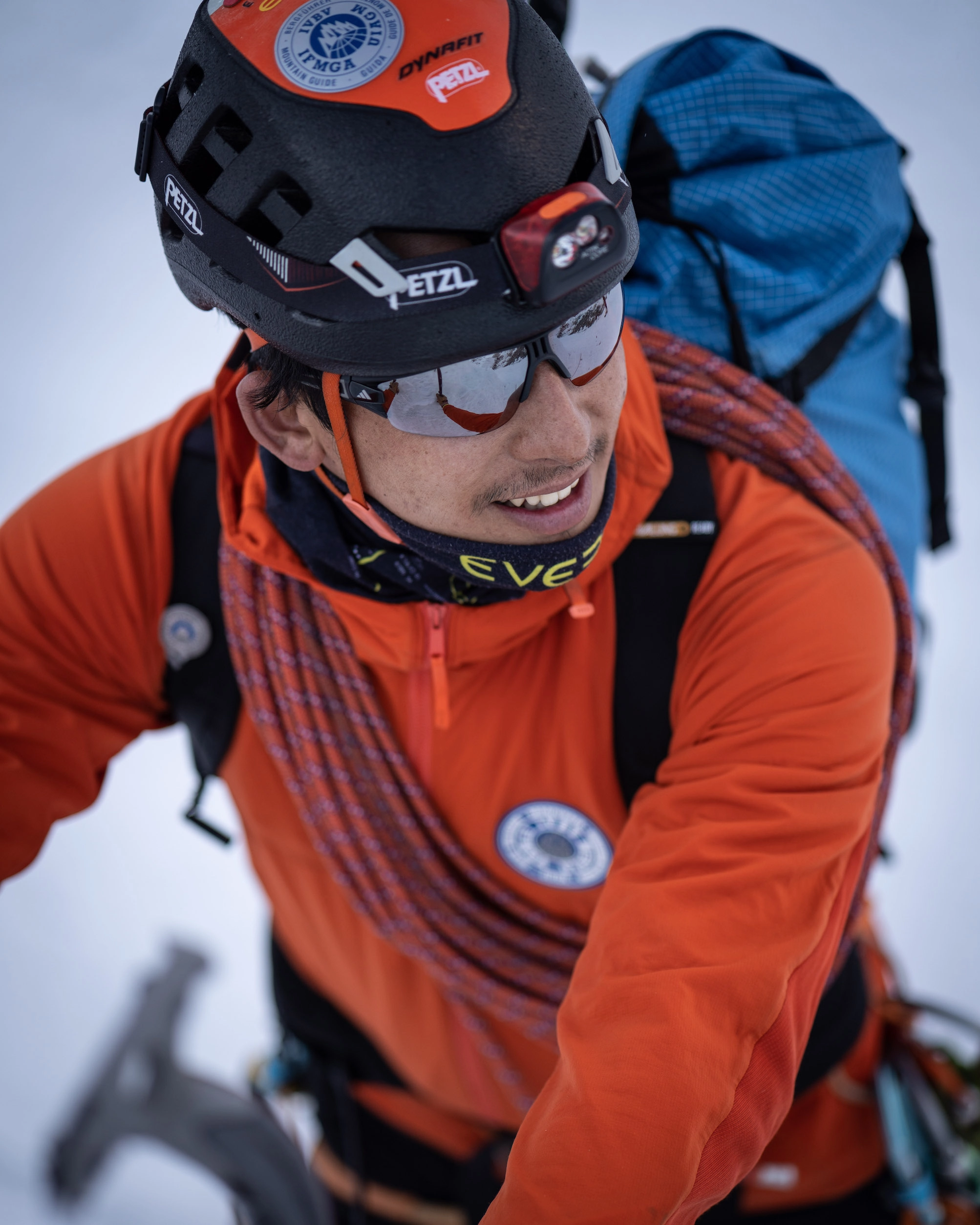
Get the 1:1 Guide Experience.
Our IFMGA certified guide - Prakash Sherpa oversees all our expeditions and operations, but you can also guarantee that he'll be your personal, 1:1 guide on the mountain.
FAQs
Personalize Your Trip
Enquiry Now →
Flexible options are available to adjust the itinerary, services, and guiding support based on your needs.