

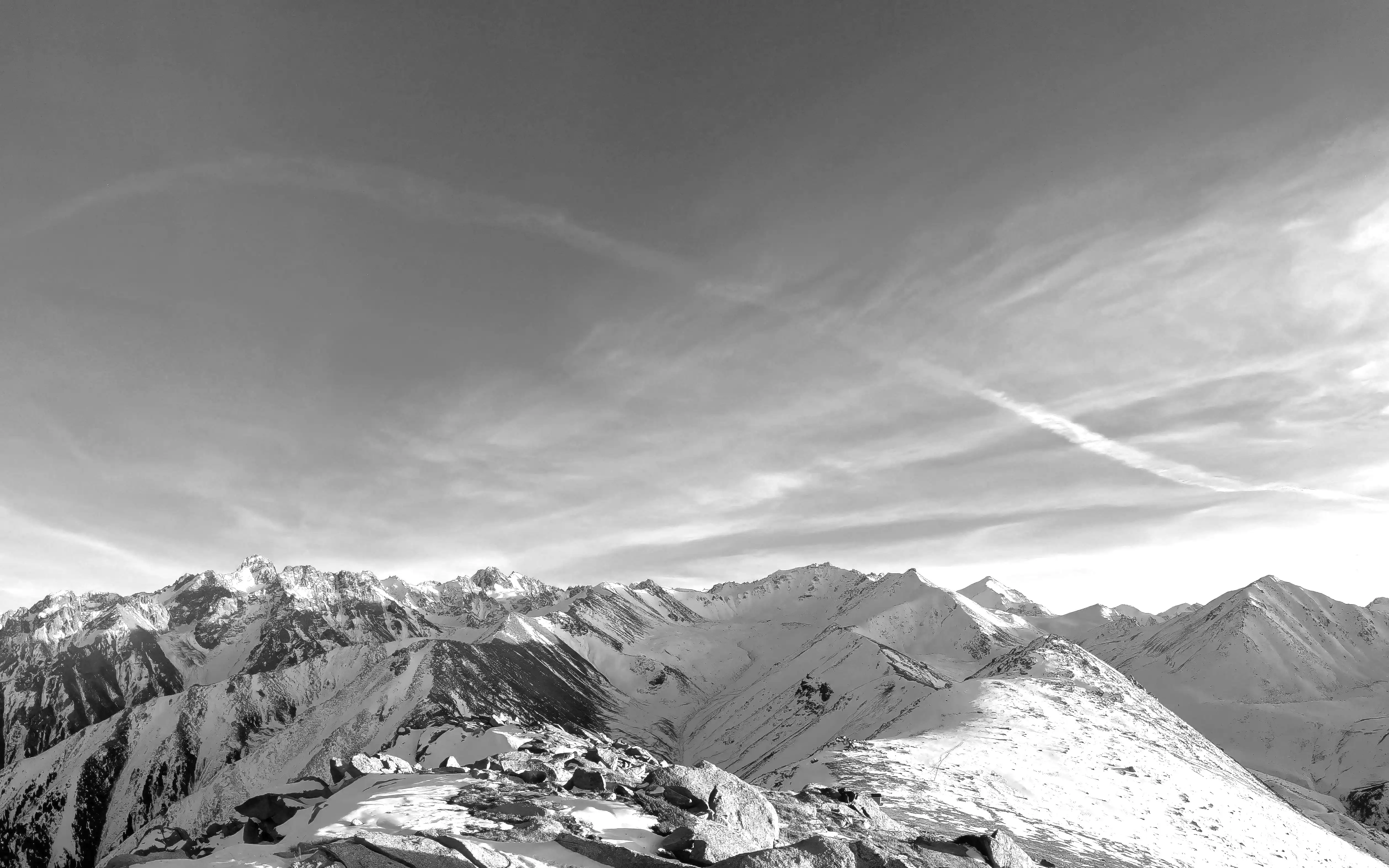
AMA DABLAM EXPEDITION
Trip Description
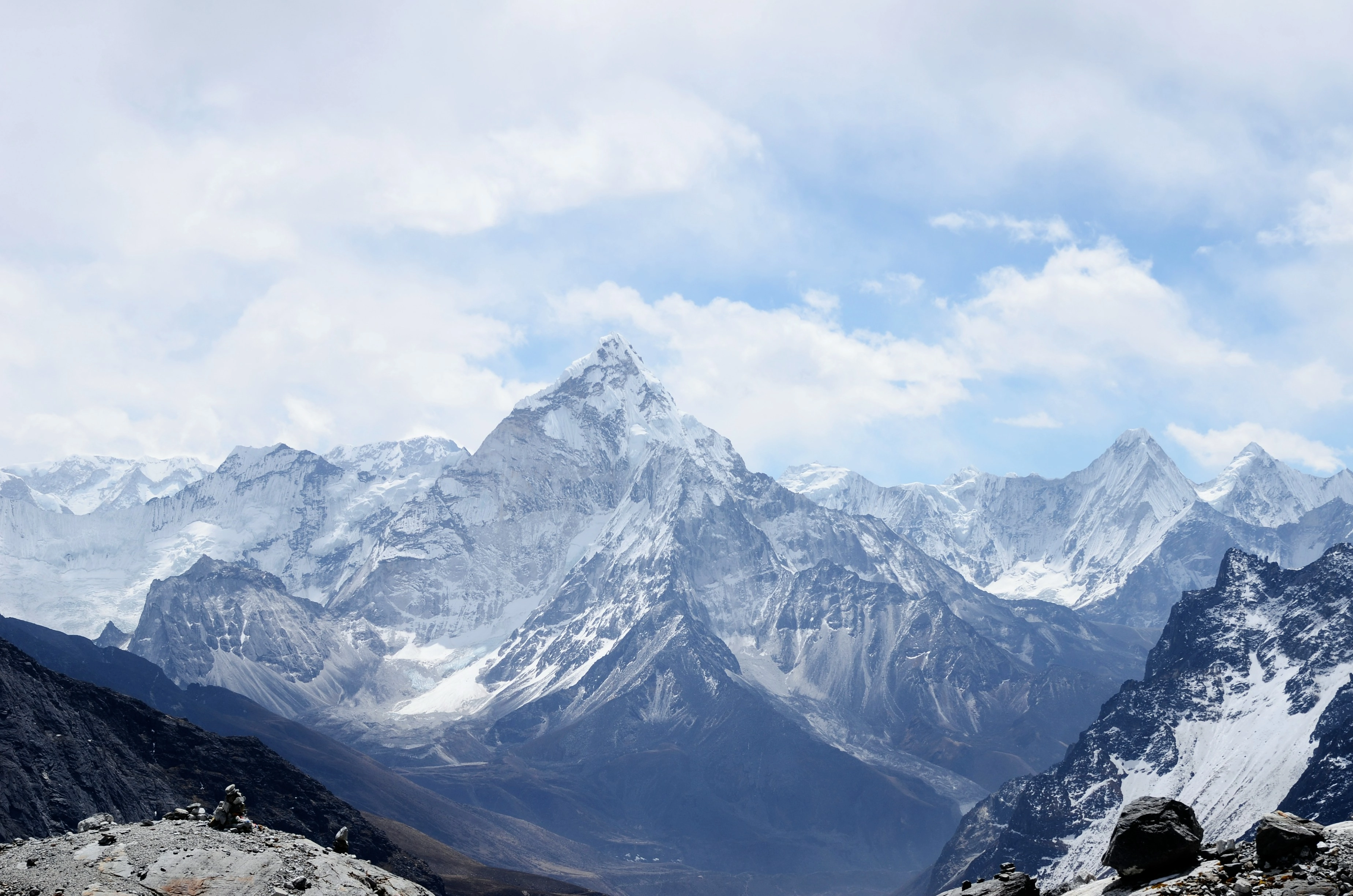
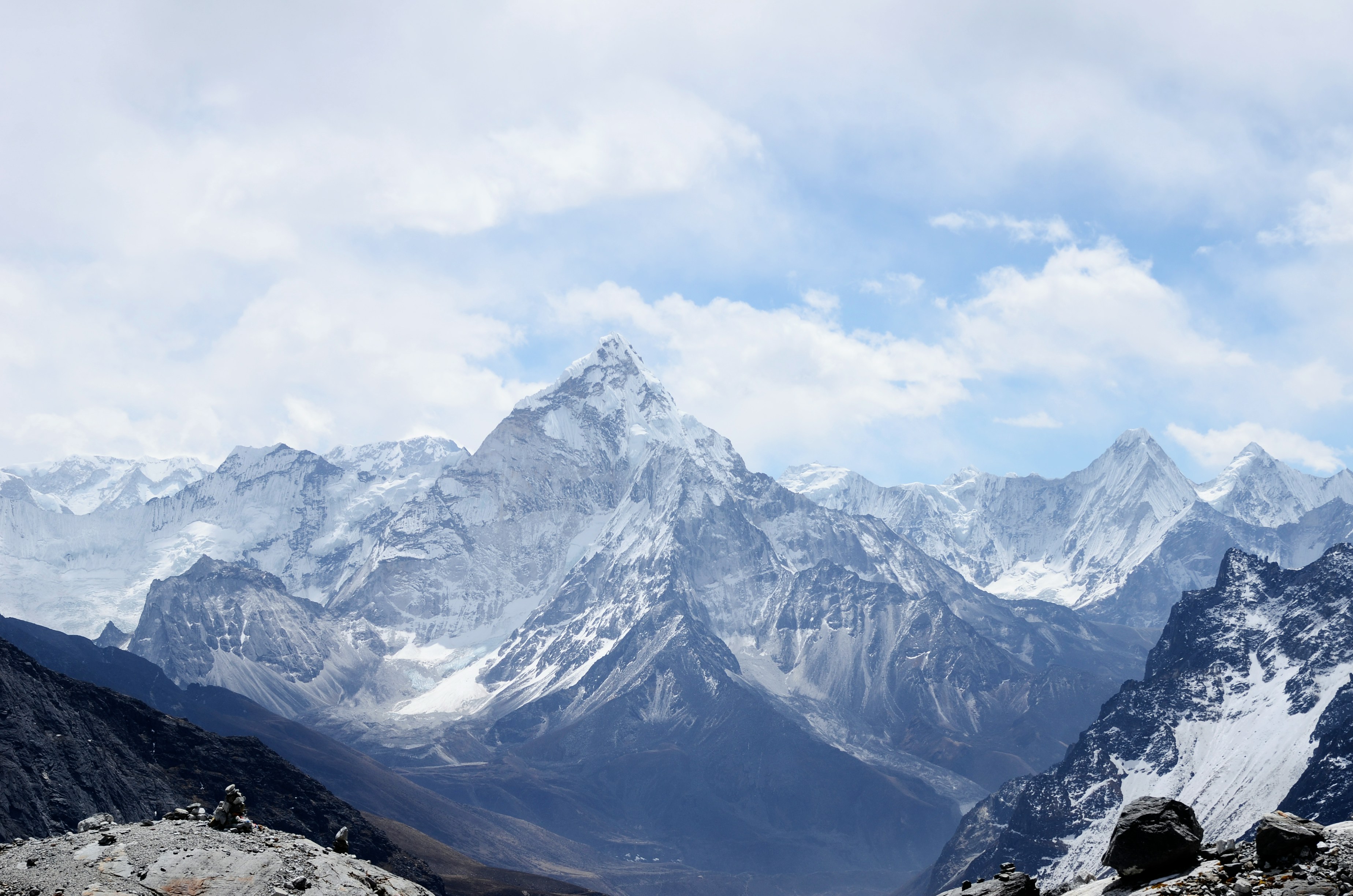
Ama Dablam stands approximately 12 kilometres south of Everest, in the heart of the Mahalangur Range. Its name comes directly from the Sherpa language and the culture that surrounds it — Ama means mother, and Dablam refers to the sacred pendant box traditionally worn by Sherpa women. The mountain's long ridgelines extend on either side like a mother's arms sheltering her children, while the Dablam glacier hangs suspended beneath the summit like the pendant itself. It is one of the most evocative and meaningful names in all of mountaineering.
The mountain holds deep spiritual significance for the Sherpa people. Before any climbing begins, a Puja ceremony is conducted at Base Camp — a full ritual led by a lama, attended by the entire expedition team. Prayers are offered, rice and flour are tossed into the air, and the mountain is asked for safe passage. This ceremony is not a formality, it is a genuine act of respect for the mountain and for the culture that has protected and revered it for generations. Being part of it is one of the most memorable experiences of the entire expedition.
The Southwest Ridge, the route of the first ascent and the standard line today is considered a masterpiece of Himalayan climbing. The quality of the granite on the lower and mid sections of the route is exceptional by any standard. Rather than the endless snow plods that characterize many high-altitude climbs, Ama Dablam offers something different: technically interesting terrain across rock, ice, snow, and mixed ground, with exposure and drama at every stage. The Yellow Tower near Camp 2 is the climb's signature challenge — a near-vertical section of granite requiring real rock climbing ability, not just strength and fitness.
Above Camp 2, the route becomes more snow and ice dominated. Camp 3 is established at approximately 6,400m beneath the Dablam glacier and is used as a high rest point on summit day. The final push to the summit crosses dramatic pitched snow and ice terrain before arriving at the summit ridge — narrow, exposed, and breathtaking and then the top itself, where the view stretches across the entire eastern Himalayan arc.


Trip Overview
Few mountains in the world stop people in their tracks the way Ama Dablam does. Rising to 6,812 metres above the Khumbu Valley, its distinctive pyramid silhouette — sharp ridges sweeping outward like a mother's arms, a hanging glacier suspended beneath the summit like the dablam pendant worn by Sherpa women has made it one of the most photographed and most coveted peaks in all of the Himalayas.
Ama Dablam was first summited on 13 March 1961 by Mike Gill, Barry Bishop, Mike Ward, and Wally Romanes via the Southwest Ridge — the same route used today. It is ranked as the third most sought-after peak for permitted expeditions in Nepal, after Everest and Island Peak. Despite its lower elevation compared to the 8,000-metre giants, experienced alpinists including Everest veterans have found Ama Dablam to be a more technically demanding climb than routes on higher peaks. That contrast is precisely what draws serious climbers to it.
The Southwest Ridge is the standard and most established route. The climb moves through three high camps above Base Camp (4,600m), gaining sustained technical terrain across all three. Camp 1 sits at approximately 5,700m on a broad rocky ledge. Camp 2 is perched at 6,100m, reached via the notorious Yellow Tower — a near-vertical section of granite that is the technical crux of the entire climb. Camp 3 at approximately 6,400m sits beneath the Dablam glacier and is used as a rest point on summit day rather than an overnight camp, due to exposure risk. The final pitches to the summit cross a fluted snow and ice field before the ridge opens onto one of the finest summit panoramas in the Himalayan world.
Every metre of the technical climbing on Ama Dablam is protected by fixed ropes, requiring proficiency in ascending and descending fixed lines, passing anchors, and managing a jumar on near-vertical terrain. This is not a mountain for climbers who are new to technical terrain. But for those who are ready, it offers an experience that is genuinely rare — challenging, beautiful, culturally significant, and deeply rewarding.
At Alpinist Climber Expeditions, every Ama Dablam expedition is led by IFMGA-certified guides with real high-altitude experience on serious terrain. Our approach to this mountain is careful, professional, and deeply respectful of the climb itself, of the Sherpa culture that surrounds it, and of every climber who places their trust in our team.
Expedition Highlights
-
One of the most technically demanding and visually stunning peaks in the Himalaya
-
Alpine Grade TD — a serious, committing objective that rewards technical climbers
-
Classic Southwest Ridge route through three high camps with fixed rope protection
-
The Yellow Tower — a near-vertical granite pitch and one of the most memorable sections in Himalayan climbing
-
Puja ceremony at Base Camp — a sacred Sherpa blessing ritual before the climb begins
-
Summit views of Everest, Lhotse, Makalu, Cho Oyu, Kanchenjunga, Nuptse, Pumori, and more
-
Base Camp situated on a grassy plateau at 4,600m — one of the most scenic and comfortable in the Khumbu
-
Option for 1:1 private summit experience with IFMGA Guide Mr. Prakash Sherpa
Led by IFMGA-Certified Professionals
Ama Dablam is a mountain that demands technical competence, high-altitude experience, and sound judgment at every stage of the climb. Guides who know this mountain, who understand its route, its weather patterns, its objective hazards, and its character — make a fundamental difference to the safety and success of every expedition on it.
Every Ama Dablam expedition organized by Alpinist Climber Expeditions is led by IFMGA / UIAGM / IVBV-certified guides, the highest internationally recognized standard in professional mountain guiding. Our team's qualifications include Advanced Mountaineering, Wilderness First Aid, Helicopter Rescue and Marshalling, Rock Climbing, High-Altitude Rescue, and Basic Rescue training. These capabilities are applied practically on every expedition we organize.
Mr. Prakash Sherpa, CEO and Lead IFMGA Mountain Guide of Alpinist Climber Expeditions, has been guiding at high altitude since the age of 15 and carries over 15 years of professional experience on serious terrain. His summit record includes Everest, Lhotse, Makalu, Cho Oyu, Dhaulagiri, Manaslu, Nuptse, and Pumori — several completed without supplemental oxygen. He is a member of the Nepal National Mountain Guide Association (NNMGA). For those who choose our premium 1:1 private option, Mr. Prakash Sherpa leads the expedition personally.
Detailed Itinerary

A representative from Alpinist Climber Expeditions will meet you at Tribhuvan International Airport and transfer you to your accommodation. Once settled, you will meet your expedition guide and any fellow team members for an informal welcome. The evening is yours to rest and experience Kathmandu before the journey to the mountains begins.
1,330m
Hotel

The morning begins with a full expedition briefing — route overview, safety protocols, equipment verification, and Ministry of Tourism permit formalities. At the team meeting, you will receive your Alpinist Climber Expeditions duffel bag and cap, and confirm your packing for the days ahead. The afternoon is spent visiting several of Kathmandu's UNESCO World Heritage Sites — ancient temples, monasteries, and Newari courtyards that offer a meaningful introduction to the culture you are about to immerse yourself in.
1,330m
Hotel

An early morning mountain flight to Lukla (2,840m) takes approximately 35 minutes, with sweeping aerial views of the Himalayan range as the peaks catch the first light of day. On landing, the team assembles for a final equipment check before beginning the trek to Phakding. The trail follows the Dudh Koshi River valley through pine forest and across suspension bridges — a pleasant and gentle start to the approach.
2,610m
Lodge

The trail climbs through the Sagarmatha National Park checkpoint at Monjo before crossing the high suspension bridge over the Dudh Koshi and ascending steeply to Namche Bazaar. The Sherpa capital of the Khumbu offers the first clear views of Everest, Lhotse, and Ama Dablam itself — the mountain you are heading toward now visible ahead for the first time.
3,440m
Lodge

A structured acclimatization day in Namche. A morning hike to the Everest View Hotel ridge at approximately 3,800m follows the classic principle of climbing high and sleeping low — helping the body begin adapting to reduced oxygen levels at a controlled pace. The views from the ridge across Everest, Lhotse, Nuptse, and Ama Dablam are exceptional.
3,440m
Lodge

The trail descends through rhododendron forest before climbing to the ridge at Tengboche. The famous Tengboche Monastery — one of the most significant Buddhist monasteries in Nepal — sits at this ridge with views of Ama Dablam, Everest, Lhotse, Nuptse, Thamserku, and Kangtega. The team pauses here for the monastery's blessings before continuing. It is a deeply atmospheric stop on the way to the mountain.
3,860m
Lodge

Leaving Tengboche, the trail descends to Diboche before crossing the Imja Khola suspension bridge and climbing to Pangboche — a quiet traditional Sherpa village with one of the oldest monasteries in the Khumbu. A visit here for a blessing before the technical climb ahead is a meaningful part of the expedition. From Pangboche, Ama Dablam appears extraordinarily close and imposing — its Southwest Ridge in full view for the first time.
3,985m
Lodge

From Pangboche, the trail branches away from the main Everest route and climbs toward the base of Ama Dablam. The approach crosses open hillside with expanding views of the peak growing larger with every step. Base Camp at 4,600m is situated on a wide grassy plateau — one of the most comfortable and scenic Base Camps in the entire Khumbu. Views of Ama Dablam, Thamserku, Taboche, and Kongde surround the camp. Tents are pitched, equipment is organized, and the climbing phase of the expedition formally begins.
4,600m
Camp

The day begins with the Puja ceremony — a sacred Sherpa ritual conducted by a lama, attended by the full team. Prayers are offered to the mountain, rice and flour are tossed into the air, and every piece of climbing equipment is blessed before being used on the mountain. Being present at the Puja is one of the most memorable and humbling moments of the entire expedition.
After the ceremony, your IFMGA guide leads a structured technical training session at Base Camp. This covers fixed rope technique, jumar operation on steep terrain, crampon use, ice axe management, and the specific skills needed for the Yellow Tower and the mixed sections above Camp 1. This training is not optional — it is a direct preparation for the terrain above.
4,600m
Camp

The team moves up toward Yak Camp at approximately 5,100m for the first controlled exposure to altitude above Base Camp. This hike familiarizes the team with the lower section of the Southwest Ridge, confirms equipment function, and allows the body to begin its physiological adjustment before the real climbing begins. The team returns to Base Camp for the night.
5,100m
Camp

The first real climbing day. From Yak Camp, the route crosses open boulders and scree on the lower Southwest Ridge before reaching a short section of casual rock near Camp 1. Some large boulders must be crossed and an easy fourth-class slab negotiated before reaching the camp. Camp 1 at 5,700m sits on a rocky ledge shared with other expedition teams. Space is limited — it is comfortable but not spacious.
5,700m
Camp

The route from Camp 1 to Camp 2 is the technical heart of the entire Ama Dablam climb. The trail follows a narrow fourth-class horizontal rock ridge around a series of pinnacles and gendarmes, with massive exposure on both sides. The granite here is of exceptional quality — solid, grippy, and technically satisfying to climb.
Before reaching Camp 2, the team encounters the Yellow Tower — approximately ten metres of near-vertical granite graded French 4th class (British Severe / North American 5.5). Fixed ropes are in place, but the pitch demands real climbing technique and confident movement under pack weight. Above the Yellow Tower, Camp 2 is reached at 6,100m. After resting and eating, the team descends back to Camp 1 for the night to maximize the acclimatization benefit before the summit push.
6,100m
Camp

A full descent to Base Camp to rest, recover, and prepare for the summit push. The drop in altitude — over 1,500m from Camp 2 — allows meaningful physiological recovery. Appetite returns, sleep quality improves, and the team can properly refuel before the final ascent.
4,600m
Camp

A rest day at Base Camp dedicated to final preparation. Equipment is checked and repacked, summit day logistics are reviewed with the guide team, nutrition is prioritized, and the team rests as much as possible. The expedition leader monitors weather forecasts and confirms the timing of the summit push. A proper, balanced meal before departure is a key part of this day.
4,600m
Camp

The team moves back up the Southwest Ridge to Camp 1 — now familiar terrain. The ascent is steady and purposeful. The body is better adapted to altitude than it was on the first rotation, and the pace reflects that. Camp 1 for the night in preparation for the push to Camp 2 the following morning.
5,700m
Camp

Back through the pinnacles and past the Yellow Tower to Camp 2 at 6,100m. Hot soup and drinks are prepared on arrival. The team rests carefully through the afternoon and evening, eating well and hydrating in preparation for the pre-dawn summit start. The guide confirms weather conditions and issues the final summit briefing.
6,100m
Camp

Summit day begins at approximately 2:00am. The team dresses carefully in the dark, checks equipment, and begins moving upward by headlamp. Above Camp 2, the route enters more snow and ice-dominated terrain. Camp 3 at approximately 6,400m — situated beneath the Dablam glacier — is used as a rest stop for hot drinks and to rewarm extremities rather than an overnight point.
Above Camp 3, two dramatic pitches of solid 40-degree snow and ice lead to the side of the Dablam. Once past these pitches, the route opens onto a broad fluted snow field at 30 to 50 degrees — one of the finest sections of high-altitude climbing available anywhere in the Himalaya. This leads directly to the summit ridge and the top of Ama Dablam at 6,812 metres.
From the summit, the panorama is staggering — Everest, Lhotse, Makalu, Cho Oyu, Nuptse, Pumori, Kanchenjunga, Cholatse, and dozens of lesser-known peaks spread across the horizon in every direction. After time on the top, the team descends carefully back to Camp 2 for the night, using fixed ropes on the technical sections.
6,812m
Camp

A dedicated reserve day built into every Ama Dablam expedition. High-altitude weather is inherently unpredictable, and this buffer ensures the team has flexibility if conditions prevented a safe summit attempt on Day 17. If the summit has been reached, this becomes a comfortable rest and recovery day before the full descent.
6,100m
Camp

Full descent from Camp 2 back to Base Camp. The technical sections are negotiated carefully on the way down — rappels on the steeper pitches, downclimbing on the rocky ridge sections. Arriving back at Base Camp with the summit behind you is a moment worth holding onto.
4,600m
Camp

Base Camp is broken down and the team begins the return trek. The trail descends through the open hillside toward Pangboche, following the familiar approach route in reverse. The drop in altitude is immediate and welcome — warm food, a proper bed, and the lush lower valley ahead.
3,985m
Lodge

The return trail through Tengboche and the rhododendron forest back to Namche Bazaar. The scenery is the same as the walk in, but the perspective is entirely different — viewed now as someone who has climbed one of the most beautiful mountains in the world.
3,440m
Lodge

The final trekking day follows the Dudh Koshi River downstream through Phakding and past Sherpa villages back to Lukla. Trekking porters are thanked and said farewell to before the team settles in for the last night on the trail.
2,860m
Lodge

An early flight returns the team to Kathmandu. The afternoon is free for rest, a walk through the city, or souvenir shopping. A farewell dinner is hosted in the evening — a proper celebration of a significant achievement.
1,330m
Hotel

Private airport transfer is arranged for your outbound flight. The expedition concludes — not just as a summit reached, but as an experience that very few places on earth, and very few mountains, can provide. We hope to see you on the mountain again.
Why ACE?
Alpinist Climber Expeditions was built around a principle that has guided every climb we have organized — that the quality of the experience on a mountain is directly tied to the quality and depth of experience of the people leading it. What sets Alpinist Climber Expeditions apart is something that cannot be manufactured or replicated — it comes from decades spent on these mountains, from the culture that formed us, and from a deeply held belief that every climb deserves to be done properly.
We are a team of professional Sherpas. Not guides who have visited the Himalaya — guides who grew up here, who know these peaks in every season, and who have spent careers developing the technical skills and mountain judgment required to lead expeditions safely and successfully.
Our team holds IFMGA / UIAGM certification — the highest international standard in professional mountain guiding — alongside Advanced Mountaineering, Wilderness First Aid, Helicopter Rescue, and High-Altitude Rescue qualifications. Our lead guide has summited multiple 8,000-metre peaks, including ascents without supplemental oxygen. This is not a credential on paper. It is a lived capability that directly protects every climber who climbs with us.
We offer two expedition structures: a standard option with small-group expedition, and a premium option with 1:1 guide-to-client ratio. Both are built on the same standard of safety, preparation, and professionalism.The standard option maintains a minimum 1:3 guide-to-client ratio with a dedicated IFMGA lead guide and Sherpa support on every climb. Our premium 1:1 private option places you on the mountain directly alongside IFMGA Guide Mr. Prakash Sherpa.
We do not run high-volume operations as our clients are not bookings. They are climbers who have chosen to trust us with something significant and we take that trust seriously on every single expedition. We do not cut corners on acclimatization, staffing ratios, or safety equipment. We organize expeditions the way they should be organized — with patience, precision, and the kind of local knowledge that only comes from growing up in these mountains and spending a career on them.
The Team
Expedition Guides
Every guide on our team has been selected for their technical ability, high-altitude experience, and personal commitment to the safety and success of every climber they lead. All guides carry extensive experience at altitude and hold a proven record of safety, summit success, and strong compatibility with international clients.
The number of guides assigned to each expedition is determined by the size of the climbing team. Our standard guide-to-member ratio is 1:3, ensuring that every climber receives consistent, attentive support throughout the approach, the acclimatization phase, and the technical climb itself.
Climbing Sherpa Support
A dedicated team of experienced Climbing Sherpas supports every expedition with load carrying on the mountain, route preparation, and high camp management. On summit day, we maintain a 1:1 Sherpa-to-climber ratio — a commitment that reflects our belief that the summit push is where support matters most.
Our Climbing Sherpas are not simply load carriers. They are experienced high-altitude professionals who understand the mountain, the route, and the demands of summit day. Their presence alongside every climber on the final push is a core part of how we manage safety and success on the upper mountain.
What to Expect from Our Team
- Technically qualified, IFMGA-certified lead guidance on every expedition
- A standard guide-to-member ratio of 1:3 — adjusted based on team size and peak requirements
- 1:1 Climbing Sherpa support on summit day for every team member
- Guides who are experienced, companionable, and genuinely invested in your success
- Full medical kit, satellite communication, and emergency response capability carried by the team at all times
- A premium 1:1 private option available — summit alongside Mr. Prakash Sherpa directly
Trip Notes
-
The best seasons for Ama Dablam are autumn (October to November) and spring (April to May). Autumn is the primary season — stable weather, clear skies, and the most active period on the mountain. Spring offers fewer teams on the route, which many experienced climbers prefer. Winter ascents are technically possible but involve extreme cold and high wind above 5,000m. This expedition is not suitable for first-time technical climbers or those new to high altitude.
-
The expedition runs for 24 days, including the trek approach, acclimatization, high-camp rotations, summit push, and full return to Kathmandu.
-
You will stay in comfortable lodges during the trekking approach and descent. At Base Camp, accommodation is in a private single room at the lodge. Above Base Camp, accommodation is in tented camps at Camp 1 (5,700m), Camp 2 (6,100m), and Camp 3 (6,400m — rest stop only on summit day, not overnight).
-
Group size is a minimum of 2 members with 1 IFMGA Mountain Guide, and a maximum of 4 members with 2 IFMGA Mountain Guides. The number of guides is always determined by the size of the team.
-
The pace and structure of the climb above Base Camp is managed in the field by the expedition leader based on current weather forecasts, route conditions, and team readiness. The summit window is informed by all of these factors.
-
A free duffel bag and baseball cap are provided to every member at the expedition team meeting in Kathmandu. The duffel bag will be used to carry your expedition supplies to Base Camp.
-
You must bring your own daypack or backpack with a waterproof cover for daily use during the trek. Use it to carry personal essentials such as cash, important documents, your camera, a notebook, snacks, and a change of clothing.
-
You can leave any luggage that is not needed on the expedition safely at your hotel in Kathmandu. There is no need to carry non-expedition items to Base Camp.
-
Guesthouses along the trekking route may charge a small fee for charging electronic devices such as phones, cameras, and battery packs. Carry a power bank as a backup.
-
Personal travel insurance with high-altitude rescue and medical evacuation coverage is mandatory and must be arranged before departure. Please ensure your policy covers peaks above 6,812m.
Equipments
Ama Dablam demands well-tested, properly fitted equipment across every category. The list below covers the personal gear essentials for a 24-day 6,000m technical expedition. All personal clothing and climbing equipment should be sourced and used in the field before departure — never bring gear on an expedition that you have not already tested.
Headwear
-
Sun hat or lightweight cap
-
Warm fleece or wool hat
-
UV-protective sunglasses (category 4 strongly recommended)
-
Buff or thin balaclava / face mask
Handwear
-
Lightweight fleece or wool inner gloves
-
Gore-Tex outer mitten gloves
Clothing
-
Gore-Tex waterproof jacket
-
Gore-Tex waterproof trousers
-
Hiking trousers
-
Fleece jacket or warm mid-layer — slim enough to layer comfortably under Gore-Tex shell
-
Moisture-wicking base layer top
-
Thermal base layer trousers
-
Down jacket with hood
Footwear
-
Well broken-in trekking boots
-
Double-insulated alpine climbing boots
-
Crampons compatible with alpine boots — 12-point recommended
-
Snow gaiters
-
Trekking socks (4–5 pairs)
-
Camp sandals or light slippers
Technical Climbing Equipment
-
Ice axe
-
Sit harness
-
Locking carabiners and belay device
-
Ascender (jumar) — essential for fixed rope sections on this route
-
Climbing helmet
Camping & Trekking Essentials
-
Sleeping bag rated to at least -20°C
-
45-litre rucksack with rain cover
-
Large duffel bag with padlock (for porter loads)
-
Headlamp with spare batteries
-
1-litre water bottles (x2)
-
Thermos flask
-
Trekking poles
-
Personal first aid kit
Hygiene & Sun Protection
-
Waterproof wash bag
-
Medium towel
-
Toiletries — soap, toothbrush, toothpaste
-
Sunscreen SPF 50+ including lip balm with sun protection
-
Hand sanitizer and handwash
-
Toilet paper and wet wipes
Whats Included
-
 Ama Dablam climbing royalty fees
-
Summit route fixing fees
-
Sagarmatha National Park entry permit
-
Pasang Lhamu Rural Municipality entry permit
-
TIMS (Trekkers' Information Management System) card
-
Liaison officer — wages, insurance, and transportation
-
Garbage disposal and environmental management fees
-
All government taxes, VAT, and official tourism service charges
-
IFMGA-certified lead mountain guide — full wages and comprehensive insurance
-
Experienced Climbing Sherpa support — wages, summit bonus, equipment, and full insurance
-
Base Camp cook and kitchen support — wages, insurance, and equipment
-
Porters for trekking and expedition gear at a 1:1 member-to-porter ratio
-
All staff accommodation, wages, equipment, insurance, and medical provisions
-
4-star hotel accommodation in Kathmandu with daily breakfast (3 nights)
-
Full-board lodge accommodation throughout the trekking approach and descent
-
Meals, drinks, and snacks for all members and guides at Base Camp during the expedition
-
High-altitude food, EPI gas, and cooking stoves for Camp 1, Camp 2, and Camp 3
-
Round-trip Kathmandu to Lukla mountain flight
-
Private vehicle airport pick-up and drop-off in Kathmandu
-
Single private room at Base Camp lodge with hot shower facility
-
Tents for members and guides at Camp 1, Camp 2, and Camp 3
-
Dining tent and toilet tent at Base Camp
-
Comprehensive medical kit carried throughout the expedition
-
Satellite phone for emergency communication
-
Modern weather forecast service — regular updates throughout the expedition
-
Alpinist Climber Expeditions branded duffel bag, cap, and T-shirt per member
Whats Not Included
-
 International airfare (to and from Kathmandu)
-
Nepal entry visa fees
-
Meals in Kathmandu outside of the package — lunches and dinners not covered by the included breakfast
-
Alcoholic and soft beverages
-
Internet and WiFi access
-
Personal clothing and climbing equipment
-
Personal first aid kit
-
Drone permit fees (if applicable)
-
Personal travel, medical, and emergency rescue insurance
-
Gratuities for guides, Climbing Sherpa, Base Camp staff, and porters
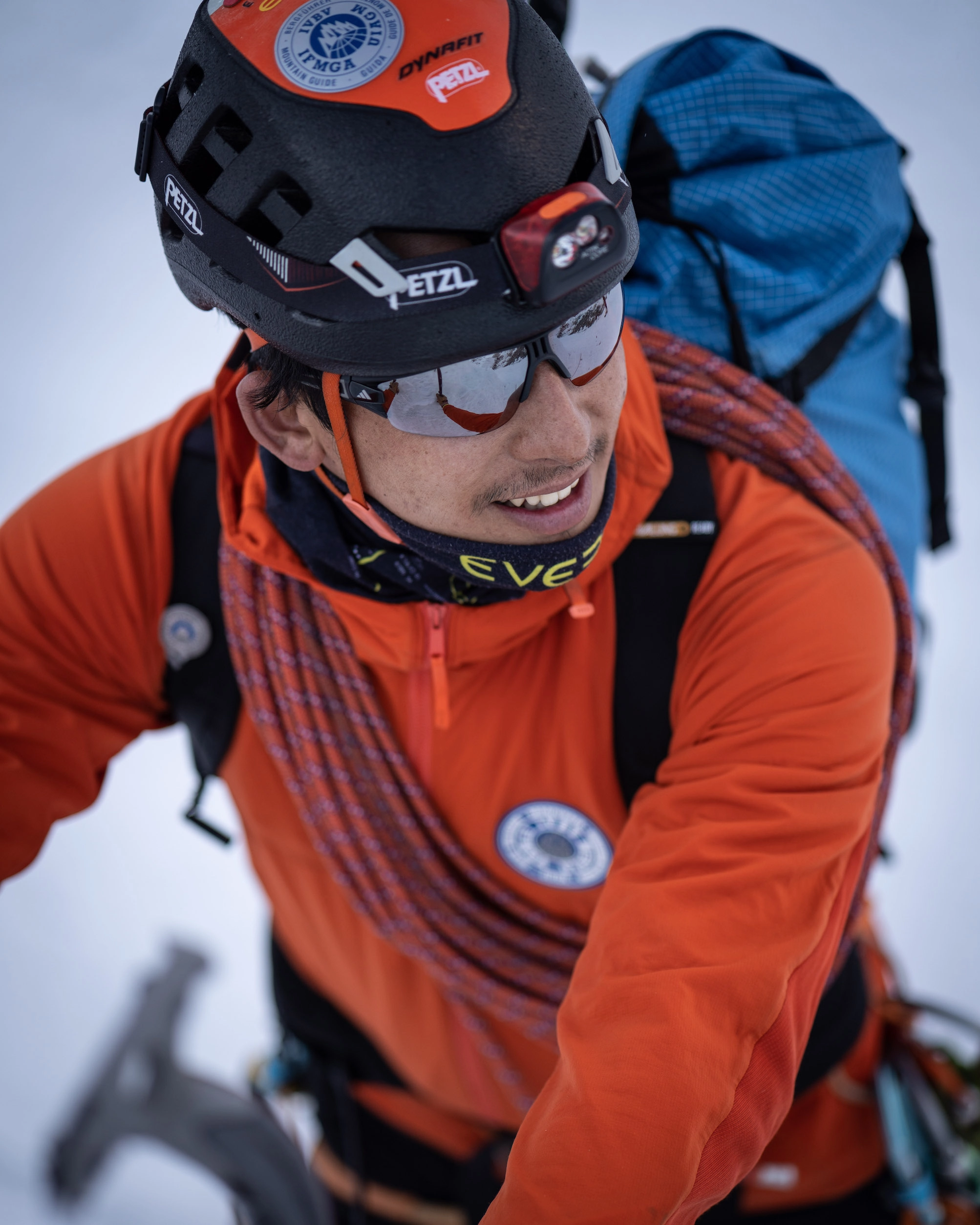
Get the 1:1 Guide Experience.
Our IFMGA certified guide - Prakash Sherpa oversees all our expeditions and operations, but you can also guarantee that he'll be your personal, 1:1 guide on the mountain.
FAQs
Personalize Your Trip
Enquiry Now →
Flexible options are available to adjust the itinerary, services, and guiding support based on your needs.